

By Anitha Rathnam K V (Co-Director – KlinIQ Ai) | 25/11/2025
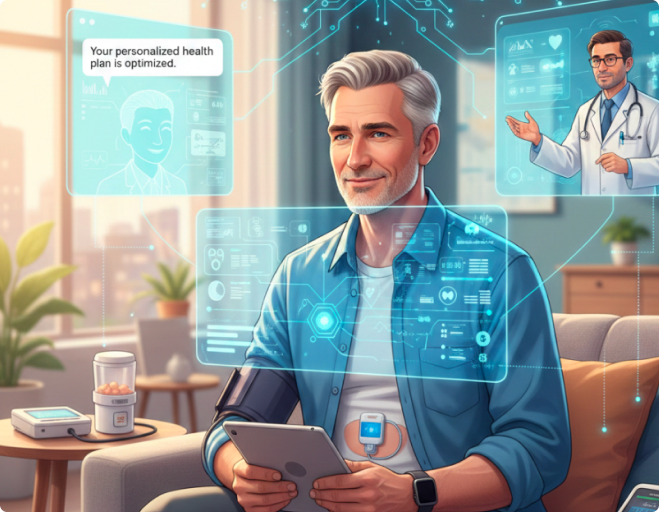
Chronic care is more than clinical management. It’s a journey built on consistency, trust, and human connection. Yet today, healthcare faces a deep challenge: rising patient volumes, a shrinking workforce, overflowing waiting rooms, and vital details slipping through the cracks.
AI isn’t here to replace doctors: it’s here to protect their time, sharpen their decisions, and help every small detail tell its story.
For Patients: Care That Listens, Learns, and Never Forgets
Patients living with diabetes, heart disease, asthma, or arthritis often repeat their history at every visit, fill out multiple forms, and sometimes worry whether something might get overlooked. AI changes that. It captures real-time vitals, recognizes trends, tracks allergies, and remembers past diagnosis notes; just like a dedicated health companion.
No more long forms. No more repeating symptoms.
AI pre-fills medical histories, flags early warning signs like rising glucose or irregular heart rhythms, and gives patients clear, human-friendly insights into their health: not just numbers and charts. Waiting time reduces drastically because patients walk in prepared, and doctors walk in informed.
For Doctors: More Presence, Less Paperwork
Healthcare professionals didn’t enter medicine to type, click, and search. They entered to heal. AI handles the invisible workload: data extraction, record summaries, visit notes, care timelines, and treatment suggestions. It alerts clinicians when something critical stands out: like an overlooked allergy, a medication conflict, or a slowly progressing complication.
AI doesn’t take their place; it restores their purpose.
Doctors get back what matters most: time with patients, clarity in decision-making, and the mental space to care deeply.
Smarter Care, Fewer Staff Burdens, Faster Flow
AI streamlines the patient’s journey: from appointment scheduling to follow-up support. Digital triage sorts cases by urgency, automates follow-ups, supports remote monitoring, and reduces the need for heavy administrative staffing.
Clinics run smoother, waiting lines shrink, and every visit becomes more meaningful: not rushed.
Security Isn’t an Option, It’s a Promise
In healthcare, trust is medicine.
That’s why KlinIQ Ai in chronic care follows global security frameworks like HIPAA, GDPR, HL7 FHIR, and ISO/IEC 27001. Health data is encrypted, access is controlled, every record change is tracked, and patient consent is respected.
It ensures transparency, explainability, and responsibility in every interaction. KlinIQ Ai does not just make suggestions: it provides evidence-based insights, referencing secure clinical data, historical records, guidelines, and validated medical sources.
It keeps patients seen, doctors supported, and every piece of health information is exactly where it needs to be.
Working together for better care. Not replacement but empowerment.